
(844) 533-7767
(661) 645-1071
ledprosworldwide@gmail.com
LED cooler door lights are engineered to replace outdated fluorescent lighting in refrigerated display cases, glass door merchandisers, and walk-in coolers. These systems deliver brighter, more uniform illumination while reducing maintenance and energy costs.
Designed for cold environments, LED cooler lighting performs reliably in low temperatures, making it the preferred upgrade for grocery stores, convenience stores, food service operations, and temperature-controlled facilities.
LED cooler door lights are engineered to replace outdated fluorescent systems in refrigerated environments such as glass door merchandisers and walk-in coolers. These solutions are part of a broader category of refrigerated display lighting designed to improve visibility, reduce maintenance, and lower energy costs.
👉 Request a Quote for Your Cooler Lighting Upgrade
Prefer to speak directly? Call (844) 533-7767 or email ledprosworldwide@gmail.com
Upgrading to LED cooler door lighting provides immediate operational and visual benefits in refrigerated environments:
For larger refrigerated environments, including walk-in coolers and temperature-controlled storage areas, specialized LED lighting solutions are required.
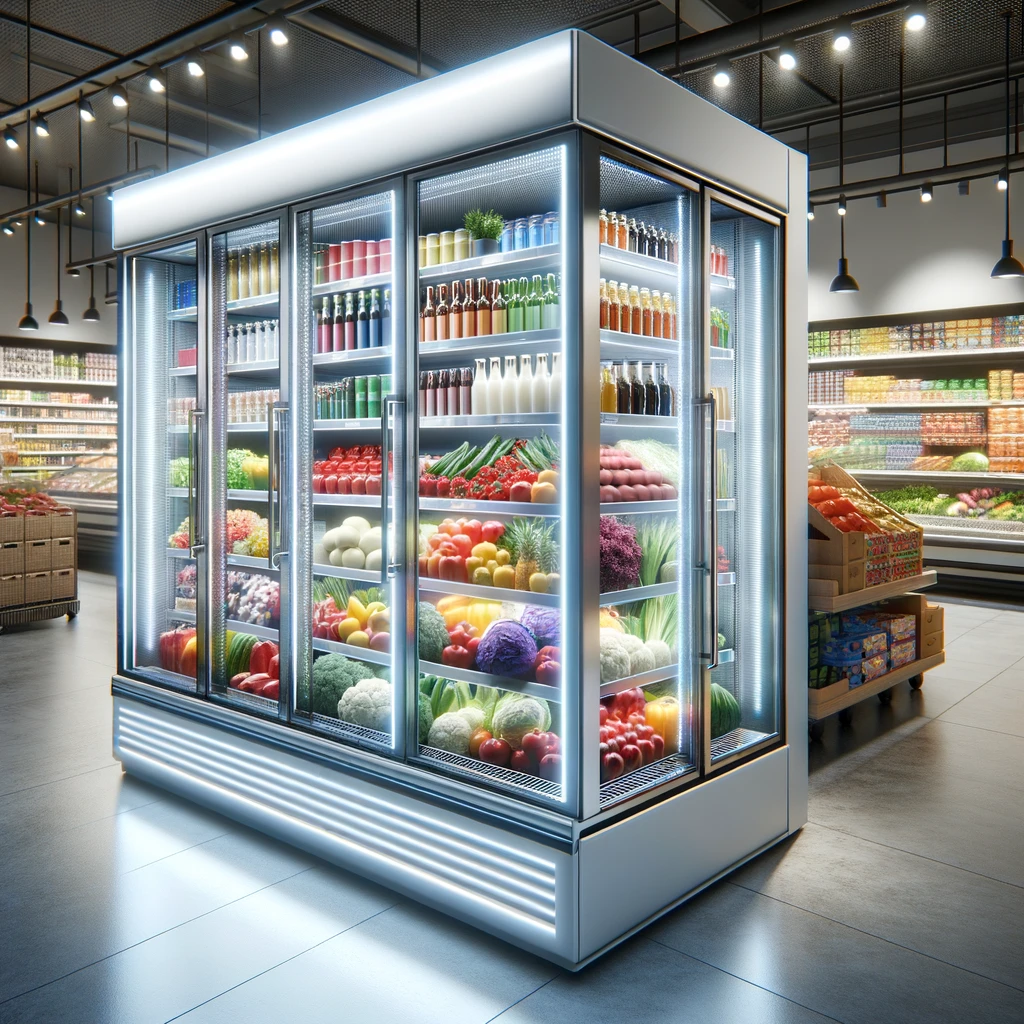
LED cooler door lighting is widely used in:
For larger facility lighting systems beyond refrigerated displays, explore Industrial Lighting Fixtures for complete commercial and industrial solutions.
LED cooler lighting is used across a range of refrigerated environments including glass door coolers, freezer doors, and walk-in cooler systems.
Installed along cooler door frames for full-height illumination across product displays.
Mounted under shelves to highlight individual product rows and eliminate shadows.
Designed to replace T12 and T8 fluorescent tubes without major structural modifications.
Fully sealed fixtures engineered specifically for refrigerated environments.
From vertical LED light bars to full retrofit kits, these systems are designed to support a wide range of refrigerated display lighting applications.
Unlike fluorescent systems, LED lighting performs exceptionally well in low temperatures.
Key advantages include:
For specialized cold storage facility lighting beyond display cases, see our broader solutions for refrigerated environments on Industrial Lighting Fixtures.
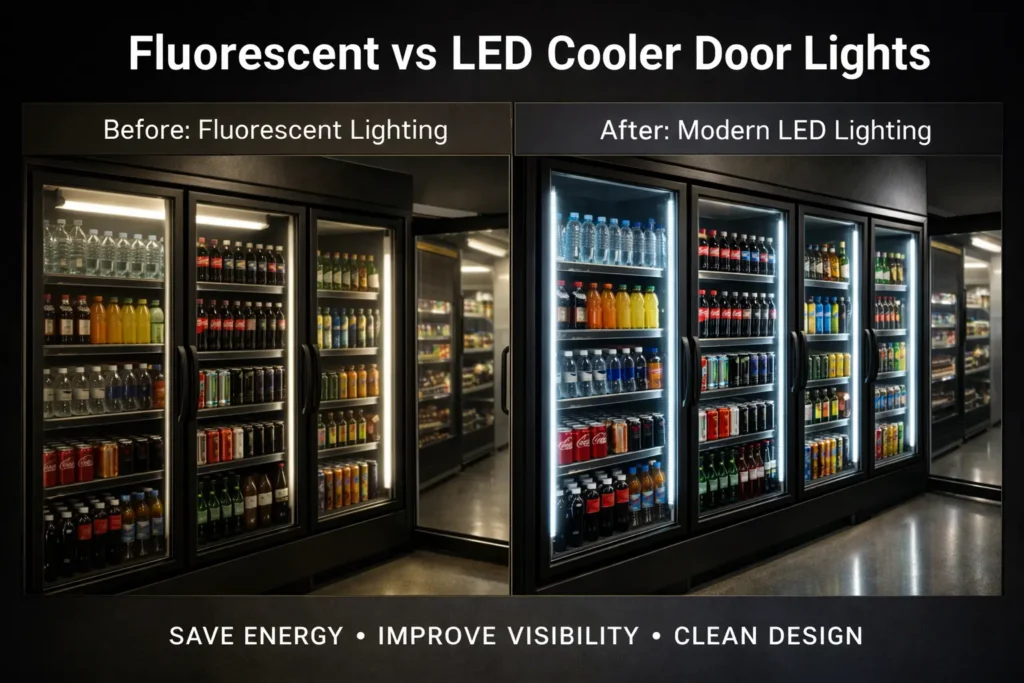
Most cooler door lighting systems still use outdated fluorescent tubes. Converting to LED provides:
👉 Common retrofit scenarios:
If your system currently uses fluorescent lighting, upgrading to LED is one of the most effective improvements you can make. See real-world retrofit examples in our retrofit gallery.
Fluorescent cooler lighting replaced with vertical LED light bars for improved brightness and reduced maintenance.
LED cooler door lighting upgrades typically deliver fast payback through:
Many projects qualify for utility rebates depending on location and application.
What is the best lighting for cooler doors?
LED vertical light bars are the most common and effective solution for uniform product illumination.
Do LED lights work better in freezers?
Yes. LEDs perform more efficiently in cold environments than fluorescent systems.
Can I retrofit existing cooler lights?
Most systems can be upgraded using retrofit LED kits designed for T12 and T8 replacements.
How long do LED cooler lights last?
Typical lifespan exceeds 50,000 hours, significantly reducing maintenance.
Learn more about LED retrofits, energy savings, and lighting performance in refrigerated environments in our resource center.
For full-facility upgrades including cold storage warehouses and industrial refrigeration, visit Industrial Lighting Fixtures.
Upgrading your cooler door lighting is one of the fastest ways to improve product visibility, reduce maintenance, and lower operating costs.